

Nip it in the Bud: Establishing Dominance

Avoiding codominant leaders is among the best strategies for ensuring long-term tree stability and minimizing storm damage. Early intervention is crucial, as it is much simpler and more cost-effective to address in young trees than to handle or alleviate in mature ones.
Codominant stems occur when two or more branches or trunks grow upward at roughly the same rate and diameter, competing for dominance instead of having one clear central leader.
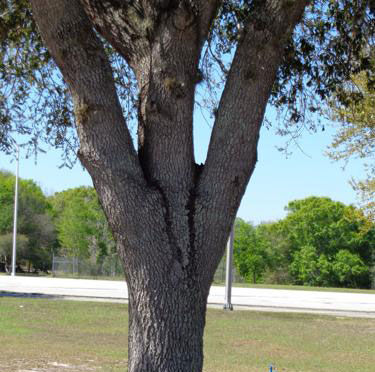
1. Start Early: The Critical Window
Begin structural pruning 1–2 years after planting and continue regularly (every 2–5 years) while the tree is young (typically under 15–25 feet tall, depending on species).
Multiple light prunings over the first 10 years can nearly eliminate codominant stems.
The sooner you act, the smaller the cuts and the faster the tree recovers.
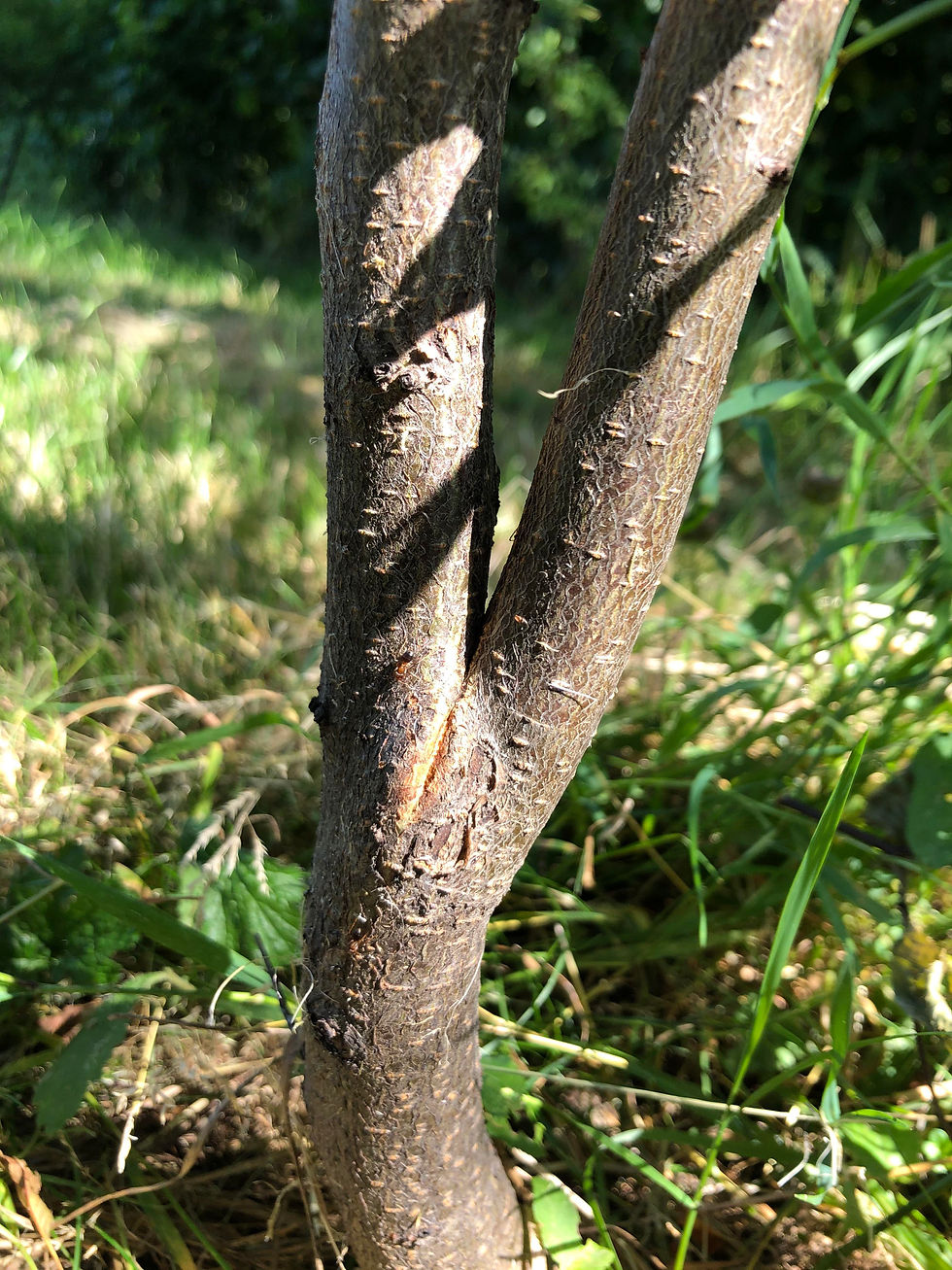
2. Pruning Goals for Strong Structure
Establish and maintain a single dominant central leader (main upright trunk).
Select the strongest, straightest, most vertical leader.
Subordinate (shorten) or remove competing upright stems that are similar in size and vigor.
Keep lateral branches subordinate — no more than ½ to ¾ the diameter of the trunk or parent stem at the point of attachment.
Encourage good spacing and wide branch angles (U-shaped crotches are stronger than narrow V-shaped ones).

Subordination technique (preferred over immediate full removal in many cases):
Use a reduction cut back to a lateral branch that is at least ⅓ the diameter of the stem being pruned.
Recent research on red maples shows that reducing a codominant stem to 50% or 75% of its basal diameter effectively improves the stem ratio while maintaining good aesthetics and minimizing large wounds.

3. Timing Recommendations
Late winter / dormant season (before bud break) is often ideal — easier to see structure, wounds close quickly in spring.
Avoid heavy pruning during active spring flush for many species.
Light corrective pruning can be done in summer if needed.
4. Step-by-Step for a Young Tree with Competing Leaders
Identify the best leader (usually the tallest, straightest, most vigorous upright stem).
Shorten the competing codominant stem(s) so it is clearly subordinate (several feet shorter if possible).
Remove any crossing, rubbing, or inward-growing branches.
Thin lightly if needed to reduce competition for light, but avoid over-thinning young trees.
Repeat in following years until the subordinate stem becomes a normal lateral branch with a proper collar.
For very small competing stems, complete removal may be appropriate. For larger ones, subordination is safer to avoid big wounds.

5. Additional Prevention Tips
Species selection — Choose cultivars with strong central leader tendencies when possible (e.g., many oaks have good excurrent form; maples and ashes often need more training).
At planting — Stake only if necessary (for wind protection or straight trunk) and remove stakes promptly. Do not let ties girdle the tree.
Training aids — Temporary bamboo stakes, ties, or spacers can help guide young growth in some cases.
Avoid bad practices — Topping, lion’s tailing, or heavy heading cuts encourage weak regrowth and more codominants.
6. What If the Tree Is Already Past the Young Stage?
Prevention is ideal, but you can still slow the problem with reduction pruning on one stem and/or install cabling/bracing for mitigation. However, the risk will always be higher than a properly trained tree.
Consistent early structural pruning is one of the most cost-effective ways to reduce long-term expenses and issues while significantly decreasing the risk of failure.

