Protecting Young Trees from Deer Damage During the Fall and Winter

Fall is here in Cincinnati! After a summer of extreme heat, cooler temperatures are finally settling in; Halloween is just around the corner, and at GFLI, we’re looking forward to the beautiful fall colors that come with the season.
Fall is a time of change, not only for us, as we transition from summer routines into the school year, but also for our landscapes and local wildlife. As shorter days and cooler temperatures affect plant growth, trees change into their fall colors, while wildlife begins preparing for the months ahead. For deer, this seasonal transition can mean increased activity, a greater search for food, and the mid-Autumn rut, which can put young trees and newly planted landscapes at risk. That’s why fall is an important time to take steps to protect young trees from deer damage.

How Deer Behavior Changes in the Fall
In Cincinnati, we have a large population of white-tailed deer. Almost everyone in the Cincinnati area, whether they live in the city, suburbs, or more rural farmland, has seen these deer on the sides of roads, in parks, or even in their backyard. They are the largest native land animal in the area today and affect our lives more than we may notice.
In the fall, white-tailed deer enter a mating season known as the "rut." This season primarily affects male deer (or bucks), causing them to become significantly more active and territorial. The increase in testosterone levels makes male deer larger, stronger, and more aggressive. As a result, their behavior changes, which can put trees and landscapes at risk.
Stripping tree bark
During the rut, bucks aggressively scrape their antlers against tree trunks. This behavior serves two purposes: shedding the velvet layer from their newly grown antlers to expose the hardened antlers beneath, and depositing pheromones from their forehead glands to mark breeding territory.
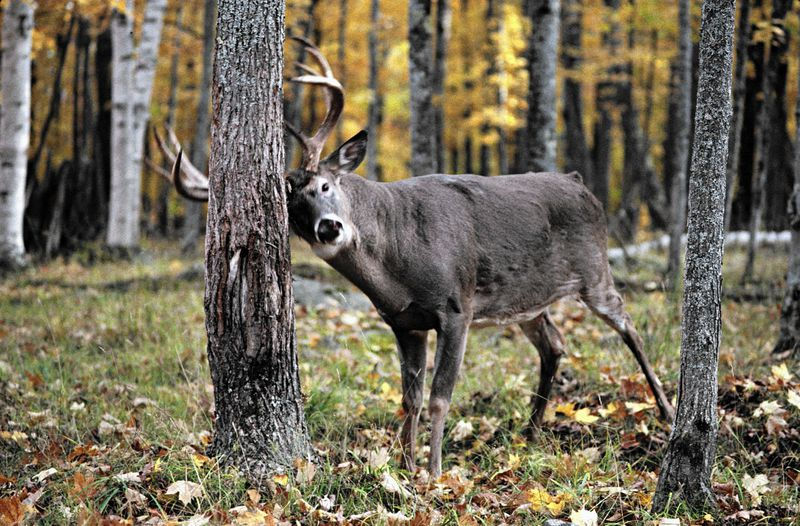
When the bark is stripped in this way, it exposes the delicate internal layers:
Phloem and cambium damage: The rubbing strips away the phloem, which transports sugars from the leaves to the roots, and the cambium, which is the growing tissue layer.
Girdling: If a buck rubs around the entire circumference of the tree, it "girdles" the trunk. This permanently severs the tree's vascular highway. Because nutrients can no longer reach the roots, the tree will starve and die.
These issues mainly affect young, newly planted trees and can stunt growth, deform trunks, or even kill the trees entirely.
Physical battering of branches
In addition to rubbing the main trunk, mature bucks use their antlers to aggressively thrash, bruise, and snap lower tree branches. This battering leaves jagged, open wounds and reduces the canopy density of smaller trees.
Bucks tend to target younger trees for this because the smaller branches are the right size to strike between their antlers
Vulnerability to diseases and pests
If your young tree survives antler rubbing and battering, exposed wood can still invite pests and infections. While some of these issues are treatable with fungal sprays or insecticides, prevention is always the best treatment plan.
Signs of Deer Damage on Trees
There are a few common signs of deer activity; some to look out for are:
Bark stripped or torn off, often 1-3 feet from the ground
Exposed wood beneath the bark
Broken branches or limbs scattered around the tree's base

Best Ways to Protect Your Trees From Deer Damage
Since young trees are so susceptible to deer damage, it is essential to properly protect them, especially during the fall season.
Poultry wire cages
Constructing a cage 4-5 feet high around the trunk of the tree is an effective way to shield the trunk from damage from deer antlers.
Plastic drainage pipe
A 4-inch corrugated drain pipe is an easy way to protect young, newly planted trees. Simply cut the pipe to fit snugly around the trunk from the ground to the lowest branch. This is a popular option due to the ease of installation and removal.
The main issue with corrugated pipe is that it traps debris and holds in moisture. Because of this, it needs to be monitored and requires more frequent maintenance.
Deer repellents
Deer repellent sprays and products can be used to create a scent barrier that deters deer from damaging trees. These products need to be reapplied after rain and are not a foolproof method of protection.
Rigid plastic mesh tree guards
This is what GFLI crews use to protect newly planted trees. It is a rigid mesh fencing that fits closely to the trunk. There are a few reasons our arborists prefer this over the above options
It works great to deter deer from damaging the trunk
It allows air and sunlight to pass through so the trunk can dry out after it rains
It doesn't trap debris such as grass, leaves, and sticks
It is very easy to install

What to do if deer damage occurs
Deer damage can be startling to come across, but it does not always mean your trees are going to die.
Young trees can be resilient. Despite damage to the trunk, your tree may still be able to live a long, healthy life.
Monitor for insects and disease, especially once spring comes and the insects that are drawn to tree wounds reemerge.
If you are concerned for your tree, call us to have a GFLI arborist inspect and recommend an action plan.
Don't Wait to Protect Your Trees!
Deer damage to trees can happen overnight, and as we enter the fall months, deer will only become more active. You can easily protect your newly planted trees with any of the options listed above, and mature trees should be inspected regularly for damage.
At Gregory Forrest Lester, Inc., our landscaping team uses deer protection for newly planted trees, and we always encourage homeowners to be proactive about protecting their landscape. If you are worried about deer damage to your trees, contact us at GFLI to have a tree health professional assess their condition.